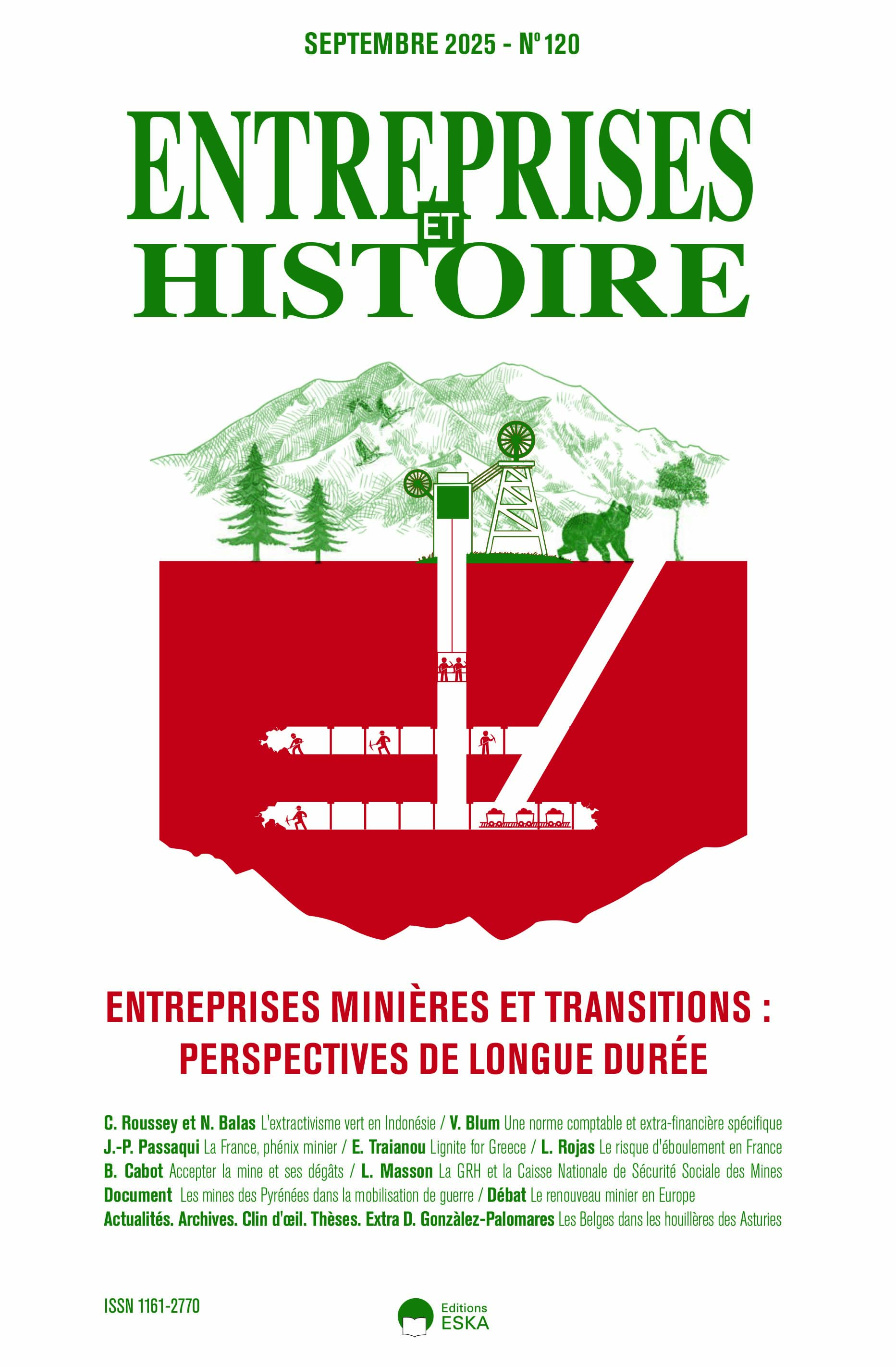
A Ruhr for Greece: Lignite Mining and the Transformation of Western Greek Macedonia (1951-2021)
DOI:
https://doi.org/10.54695/eh.120.0068Abstract
The article examines the transformation of Western Macedonia – a rural Greek border region with complex ethnic and refugee stratification and civil conflicts (1946-1949) – into an energy hub for Greece’s lignite-based heavy industry. The establishment of a nationalized lignite industry was the result of centralized state planning during the Cold War, funded by the Marshall Plan and aligned with post-war national reconstruction efforts. Its goal was to establish a lignite and thermal power centre to serve Greece’s industrialization, electrification and the development of a national energy nexus, powered by the only available fossil fuel: low-cost domestic lignite. The development was presented as a venture that would turn the mining region into a “Ruhr for the Balkans” and was well received. It did bring economic prosperity, population stability and improved the local standards of living. However, it also exacted a heavy toll on environmental and public health. Despite early warning, organised response to the “slow violence” of environmental degradation was not detected until 1974. It was only then that the push for self-sufficiency, triggered by the 1973 Oil Crisis, collided with the emerging environmental movement. Since then, the region has sought to strike a balance between securing improved operating standards from PPC (Public Power Corporation) and safeguarding the environment. The task was to ensure as many socio-economic benefits as possible without halting production. In today’s post-lignite era, Western Macedonia strives to sustain its identity as a resilient economic zone, focusing on innovative industries (e.g., hydrogen, renewable energy), education (University of Western Macedonia), agriculture, and eco-tourism. This article sheds light on Greece’s largest mining region, which, despite its role in the country’s electrification and modernization, remains largely overlooked in historical research during the era of de-lignification. This case study contributes new insights to the international debate on industrial development, deindustrialization and energy transition by exploring Greece’s experience in the context of lignite-rich regions in Europe.